Chimney sweeping
How a sweep run is usually staged
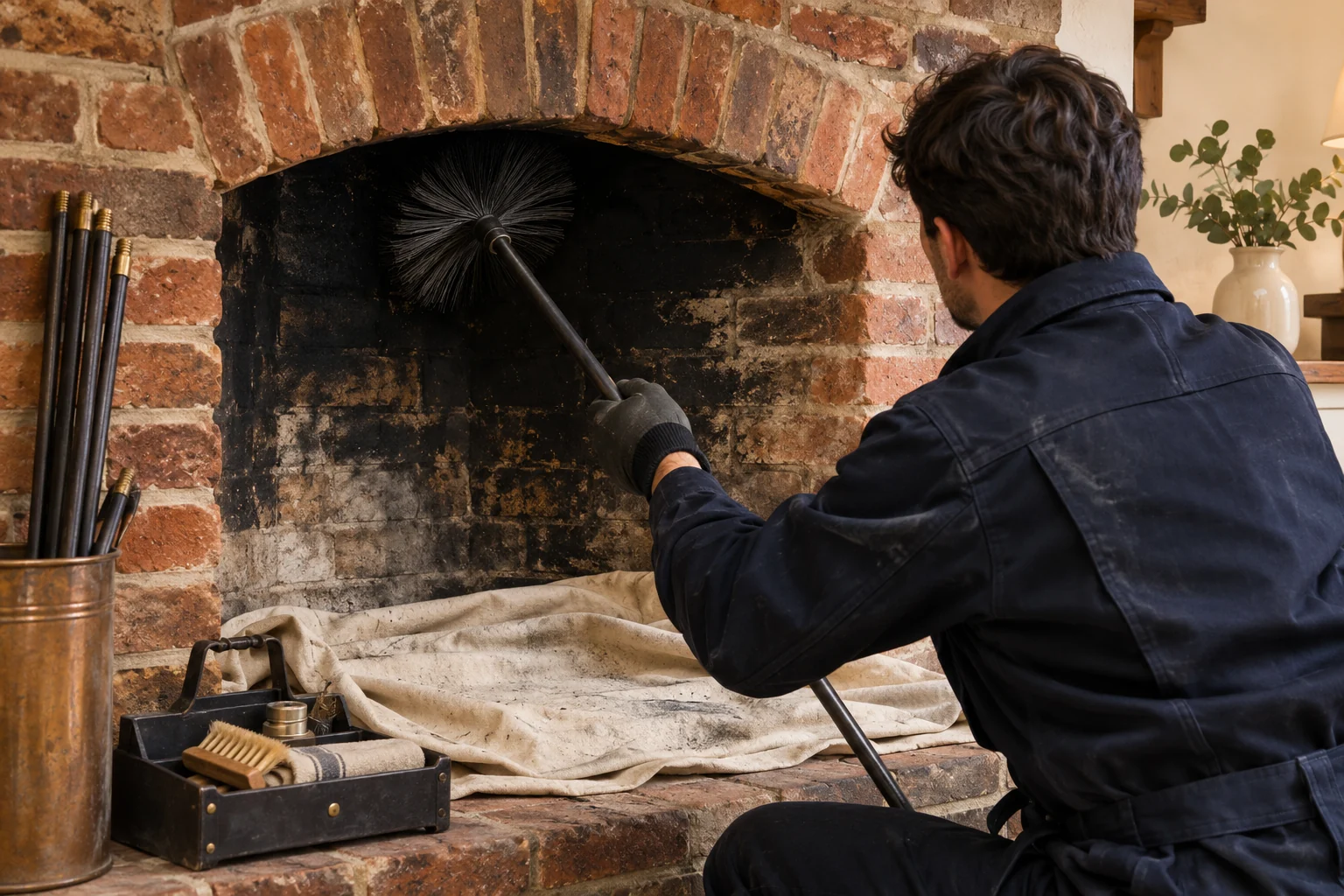
Protect the hearth, access the flue, brush and collect debris, and leave the work area tidy — a familiar trade rhythm described in plain language.
Sequence
- Protect the hearth — Drop cloths cover the floor and mantel shelf; nearby furniture shifts back if space is tight.
- Access the flue — Damper position and firebox opening are checked; rods or sectional brushes are chosen to match liner size.
- Brush and collect — Soot and scale loosen while a vacuum or collection bag captures falling debris.
- Inspect while cleaning — Many sweeps note obvious cracks or liner gaps they can see during the pass — questions for a fuller inspection visit.
- Leave the area orderly — Tools come out, cloths fold up, and ash goes to a metal container — not the household trash can.
Why the hearth matters first
A protected firebox keeps grit off rugs and keeps the damper reachable. Sweeps often seal the opening temporarily so dust does not drift into the room while work continues above.
Rod length and brush stiffness depend on whether the flue is clay tile, metal, or a poured liner — details you can confirm from appliance paperwork or a prior inspection report.
After the pass
Homeowners often receive verbal notes about what the sweep saw — buildup depth, obvious offsets, or a cap that looks weathered. Written logs help the next visit start with context.
Drop cloth
Rod set
Ash container