House detail
The chimney as part of the roofline story
Brick courses, a crowned cap, and the flue you cannot see from the yard — useful topics for anyone caring for a wood or gas hearth at home.
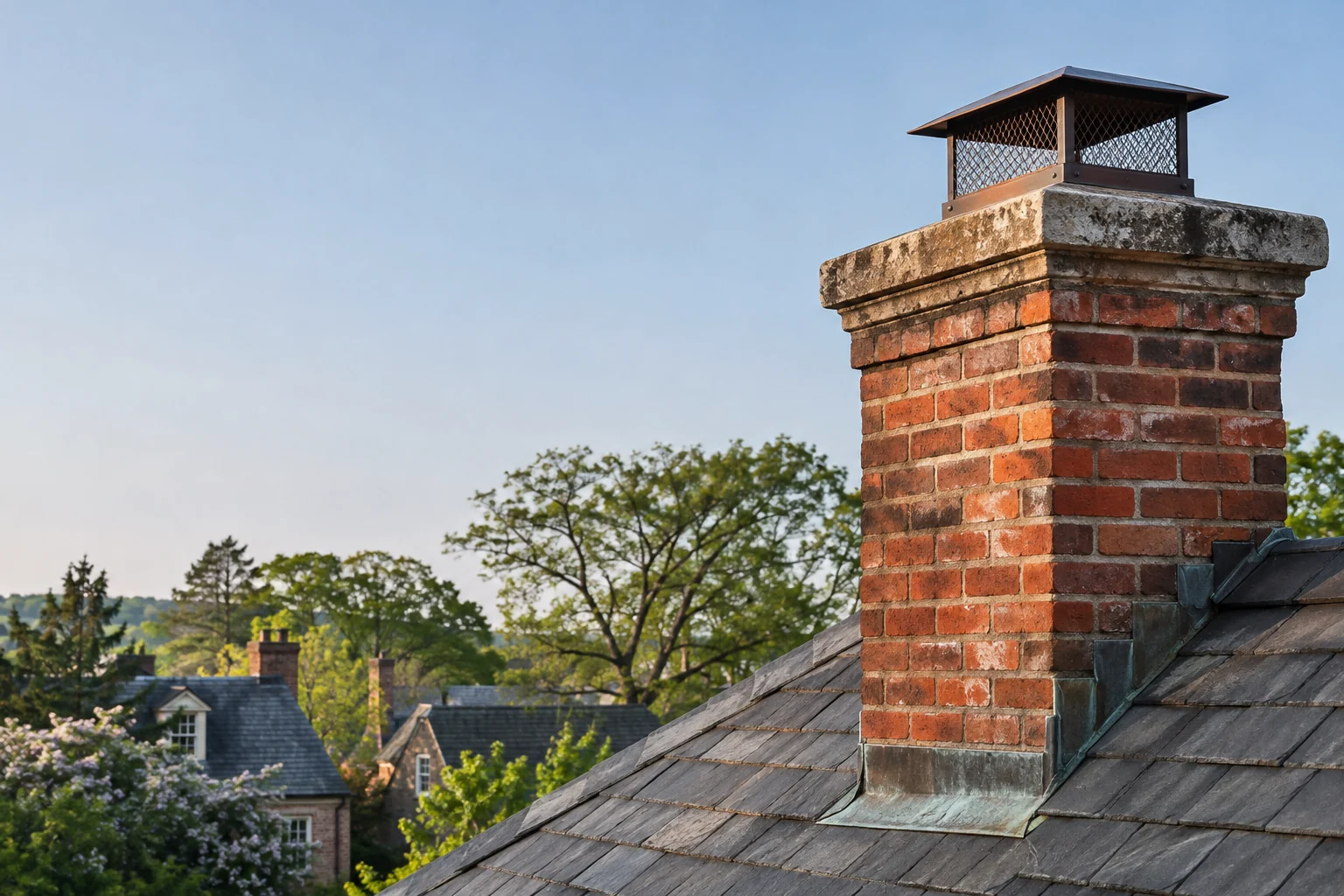
Crown, cap, and brick — what you can read from the ground before climbing a ladder or calling a local sweep.
Pathways
Where to read next
Chimney sweeping
Protect the hearth, access the flue, brush and collect debris, and leave the work area orderly.
Inspections
Exterior crown and cap, visible masonry, liner, firebox, and draft indicators worth noting before you talk with a qualified local professional.
Masonry
Joints, crowns, flashing at the roof, water wear, and mortar weathering on older stacks.
Fireplace care
Hearth, firebox, damper, screens, tools, and firewood storage as everyday homeowner topics.
From roof to hearth
Heat and weather move through brick, mortar, and metal parts in different ways. Knowing the vocabulary — liner, throat, crown, flashing — helps you describe what you see when you talk with a qualified sweep or mason.
Fuel and season
Wood, gas, and pellet appliances vent differently and carry different manufacturer expectations for cleaning and service records. Seasonal shifts — freeze, thaw, heavy rain — show up first in mortar joints and on the firebox floor.
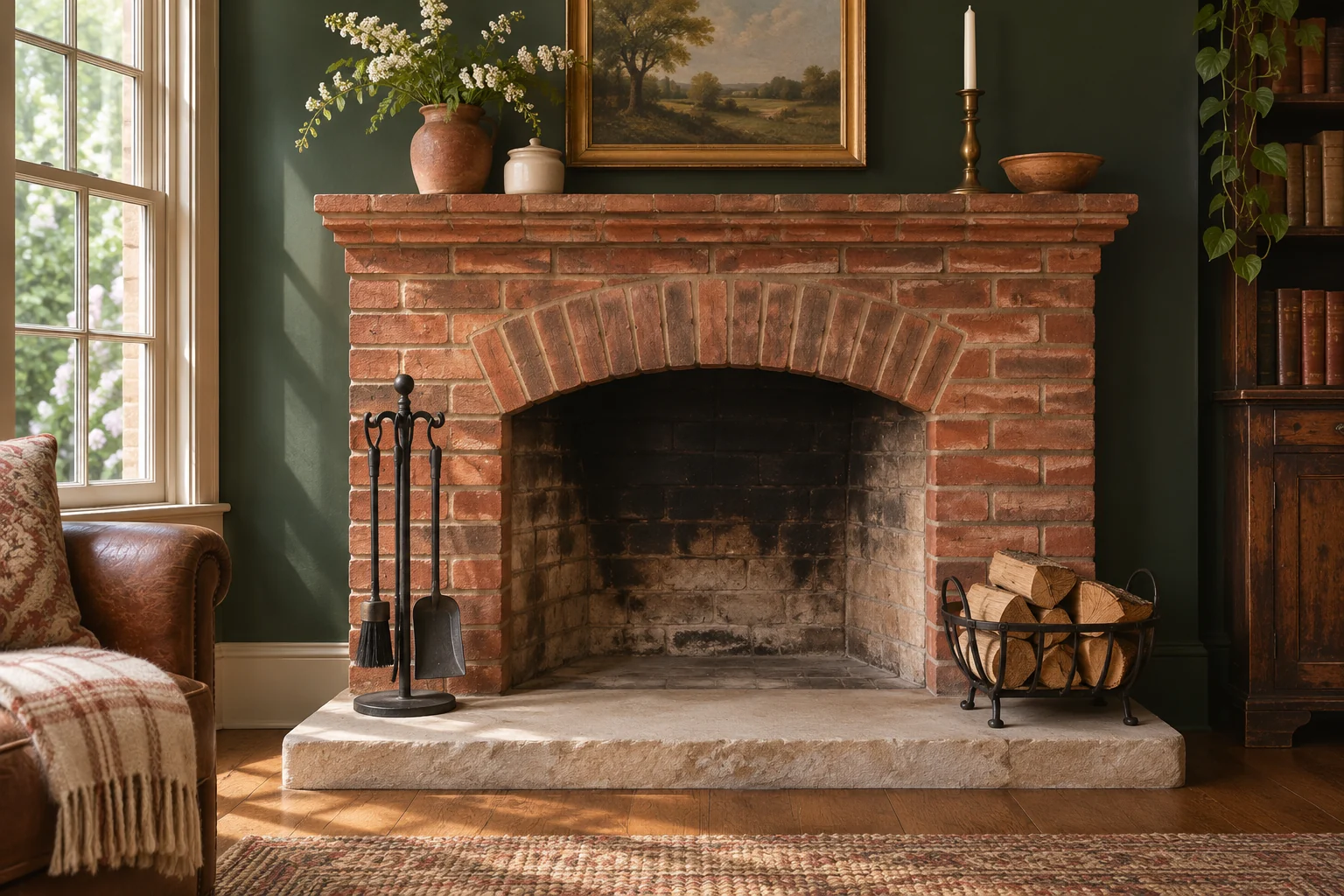
Inside the hearth room
Tools, screens, and stored wood belong in a tidy arc around the opening — not as decoration, but so ash and sparks have a predictable place to land.
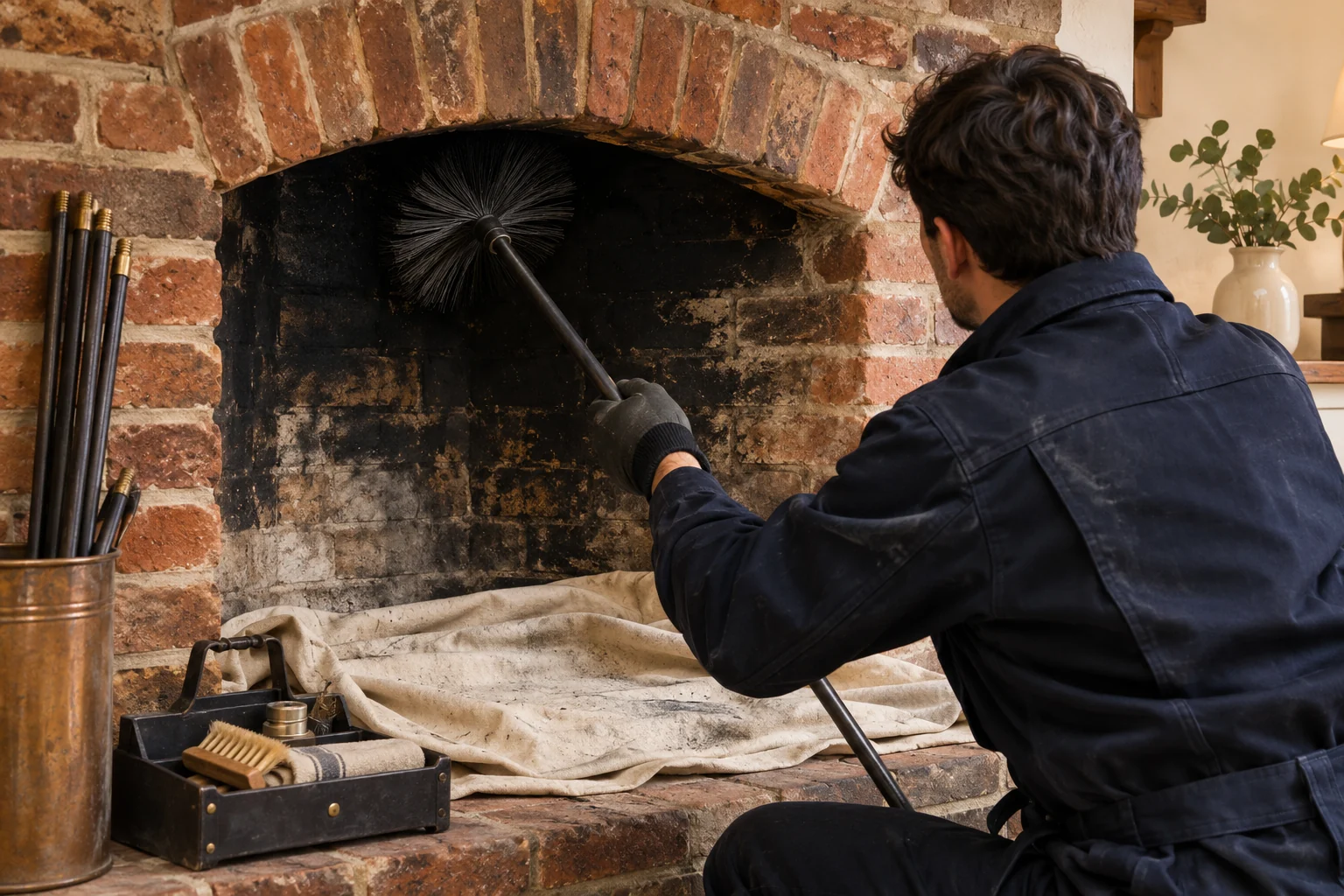
Sweeping in context
Drop cloths, vacuums, and rods are common tools; a sweep may work from the firebox upward or rooftop downward, depending on access and liner type.
Homeowner notes across the year
- After stormy weeks — Glance at the cap and crown from a safe vantage; note stains or plant growth.
- Before regular use — Open the damper, look for obstructions, and clear ashes to a metal container.
- Between visits — Keep firewood dry and away from the opening; log dates when you burn or service the appliance.